
Hairballs…we’ve all been there.
You wonder into the lounge to find your poor cat heaving and retching some nasty looking congealed mess onto the carpet.
It’s upsetting to see and hear your cat heaving like that. When it happens to Eliza she always seems surprised and confused about what’s happening to her.
After the mess appears, your cat seems to feel loads better and gets back to what they’re doing, leaving you to clear up said mess on the carpet.
So what’s going on? And is there anything that can be done to stop this or at least help?
Hairballs are pretty yuck, but they are actually part of your cats healthy grooming routine.
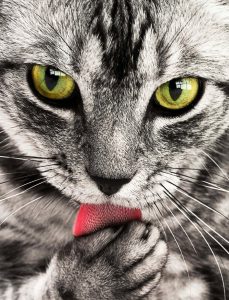
When your cat cleans themselves, they lick their fur. They have very tiny hook like structures on their tongue, which pick up loose hair as they go. This hair gets swallowed, and passes into the stomach.
Most of the hair will pass normally, but some of it stays in the stomach, forming a hairball. Over time this builds up, causes discomfort and then your cat will vomit it up to get rid of it.
It never really looks like a ball as it will become elongated as it passes up through the throat.
Cats tend to suffer from hairballs more than kittens, because as a cat grows up they get better at cleaning themselves and dislodging more loose hair from their coats. Long haired cat breeds and those that shed a lot will suffer more frequently from hairballs as they will swallow more fur.
Hairballs are a natural part of being a cat, so you can’t get rid of them all together, but you can help to reduce them as much as possible.
3 Ways to Reduce Hairballs…
- Groom your cat regularly, every day if you can. You’ll be amazed by the amount of loose hair you pick up from their coats. If you start this routine when they are younger, your cat will get used to grooming too, making it an easy job*. The added bonus is of course bonding with your fur baby in this way every day (We’re sold)!
- Distract excessive grooming by bringing out a favourite toy to play with (or playing catch the string all over the house as we do – this does involve some running for you!)
- Introduce hairball control food or treats into your cat’s diet to help manage the problem. Not everything will work for your cat (as we know all too well with Eliza and Diesel), but here are a few suggestions which we’ve found to be helpful.
* If your furry pal detests you grooming them (and some do, its OK – Diesel runs away from the grooming mitt). It might be an idea to take them for a professional grooming session every so often (maybe every 6 months) to keep everything in check.
There are three main types of hairball management
- Hairball reducing cat food. These are designed to improve the condition of your cat’s hair, reducing the amount of hair shed and also to help hairballs pass through the digestive system easily.
- Hairball reducing treats. These are again designed to improve the health of fur and helping hairballs pass safely through the digestive system.
- Hairball laxative. These are designed to help move hairballs through the digestive tract more easily.
Remember if you’re worried about the hairballs you cat is bringing up or if your cat is not behaving right and you think they may be under the weather make sure you get them checked out by a qualified vet!
Let us know if you’ve found any good food that is great for your cat and helps hairballs too.